Wild Daffodil hosts a photo challenge every month, this year the theme is windows, so I’m keeping a look out as I travel round for interesting windows.
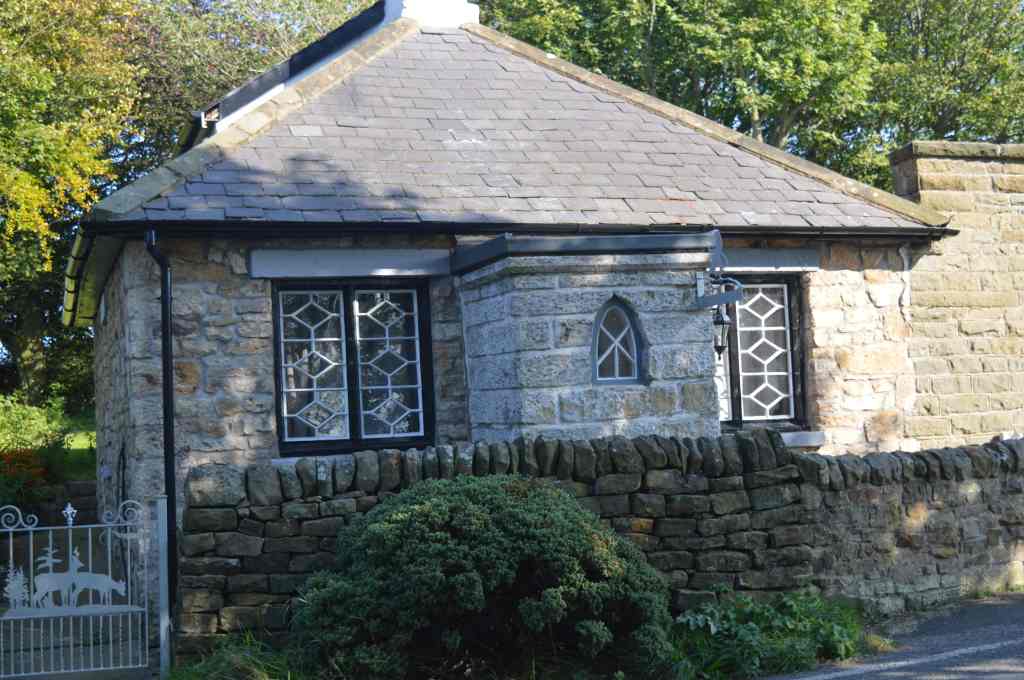
We’ve been walking on the east coast this month and I spotted a gorgeous little cottage in Ravenscar, isn’t it pretty, it looks like a lodge. I thought the windows were gorgeous, though I wouldn’t like to clean them – fiddly! If you look closely you can also see they have a beautiful metal gate.
We saw another lodge earlier on the Cleveland Way, this one is called Griff Lodge, it’s just outside Helmsley, so it will be linked to Duncombe Park. These lodges are remnants of the days when the landed gentry would have a gatekeeper to man the entrances to their land. The gatekeeper would live in the lodge. They are as tiny as they look, though most are sympathetically extended a little. There’s lots of lodges dotted around the English countryside, they’re usually pretty and quite quirky.
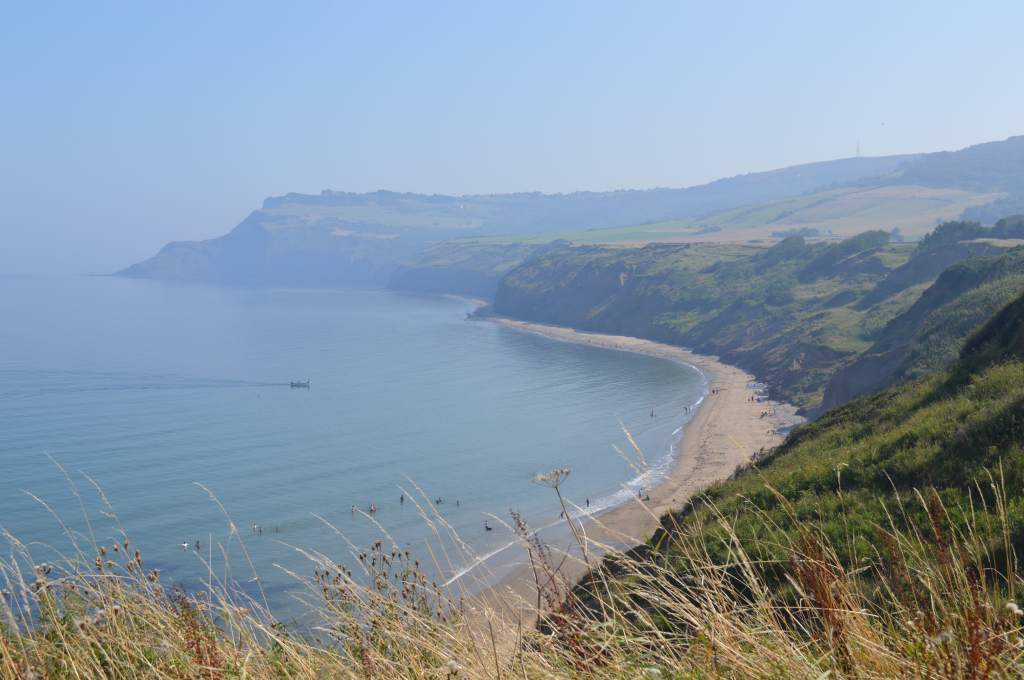
Whilst walking from Whitby to Ravenscar we passed the lighthouse. It’s unusual as it’s not particularly tall, though it is on the top of the cliff. The buildings have been converted to holiday cottages now.
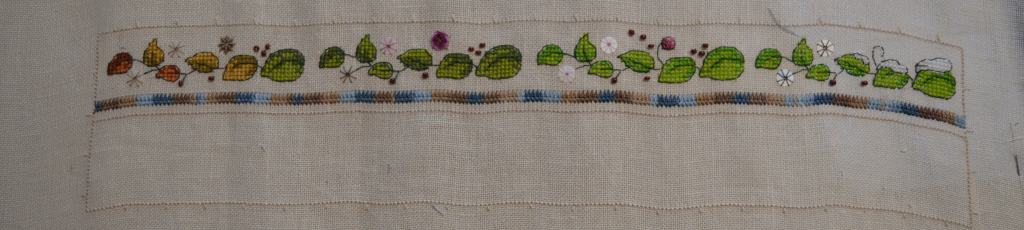
I’ve been stitching lots of windows for my coming home quilt, fourteen houses worth of windows – I’d never get a job as a joiner! This month I’ve about five bigger houses to make, so even more windows to stitch!
Quite a few people take part in the photo challenge, so why not follow the link above and have a look.
My little purse has been in dire need of replacement for several months now, it was getting to be a bit of an embarrassment and the crunch came when the clasp was so weak all my change kept falling out into the depths of my handbag! Last week I finally got round to making a new one.
I’ve a few purse frames in my stash of varying sizes and styles. I picked a rectangular shaped sew in one, slightly bigger than my current purse. I drafted a pattern by drawing round the frame and then extending the sides outwards.With hindsight I should have extended them a bit more, but it will suffice.
Ages ago I bought some embroidered silk furnishing fabric sample books, the sort you can flick through in curtain shops. The pieces aren’t huge but when I checked on line when I first got them the fabrics were retailing at £90-£120 per metre!!! It’s nice silk!
I chose one which is a pretty duck egg blue colour with a lovely floral design embroidered on it. I could just nicely position the pattern so I had a flower on the front of the purse.
I cut out the two silk pieces, two in batik cotton for the lining and two in wadding to soften it a bit. I used iron on interfacing on the silk too to give it a bit of structure. I made the lining first, just to check the pattern worked.
Luckily I read one of my previous blogs on making purses which mentioned about leaving a gap for turning at the bottom of the lining – I’d forgotton that bit! I made the basic purse, turned it and then hand stitched it into the frame. The inside isn’t as neat as I would have liked, I could cover it with some trim but I’ll probably leave it – I won’t even notice it within a week!
I used DMC thread last time, but this time I decided to try perle thread instead, I’m not so sure about it at the moment as I did have a few issues with a strand breaking…time will tell if it’s durable or not! It looks nice though!
My purse is already in use, it’s a nice size as a coin purse – big enough to get your fingers in easily! I could have done with a bit more fabric in the corners as it doesn’t look quite right at the top, otherwise I’m really pleased with it. It holds it’s shape well without being too bulky, but it’s substantial enough to hold easily.
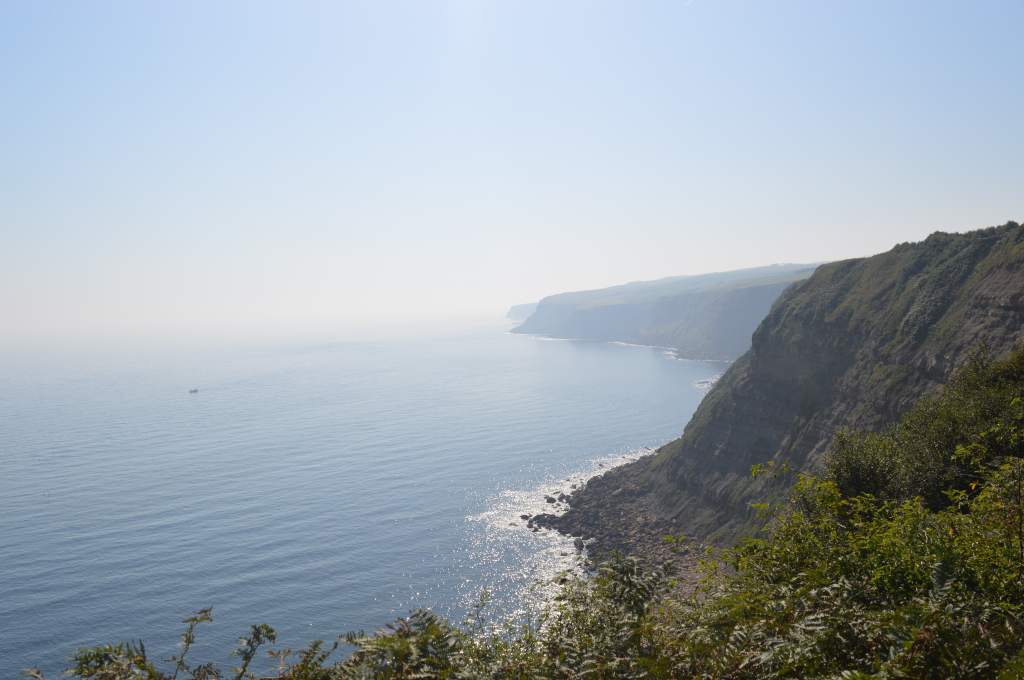
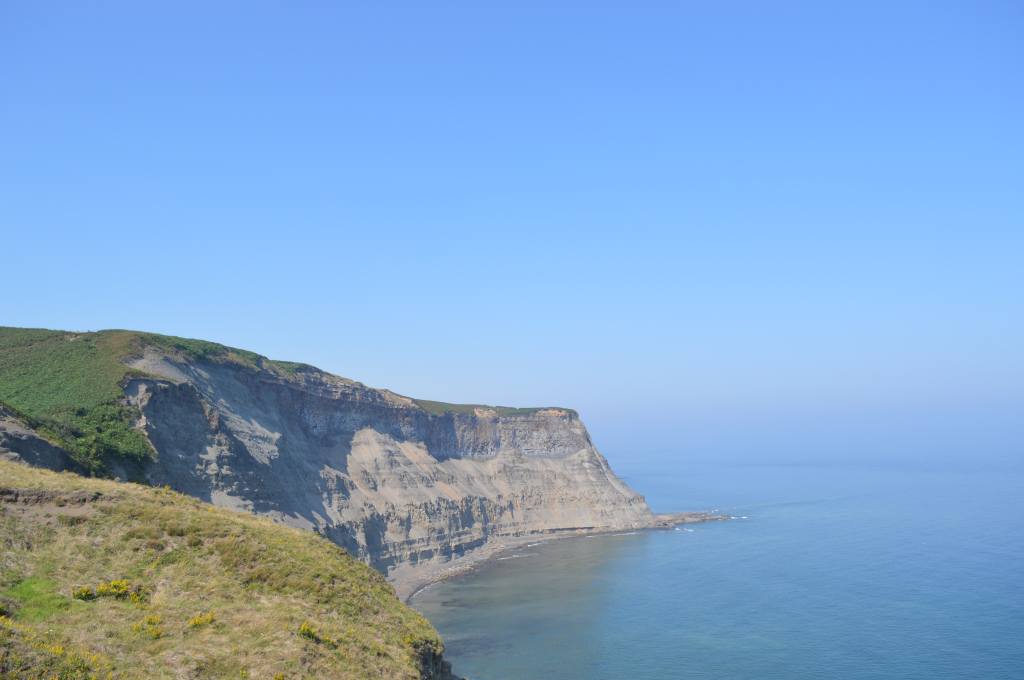
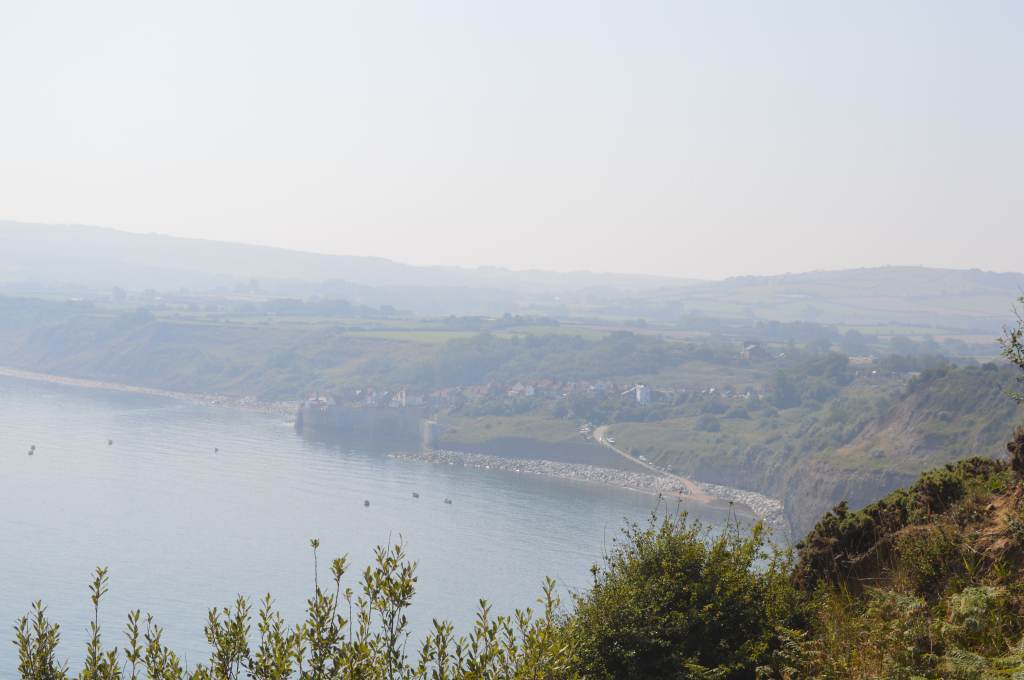
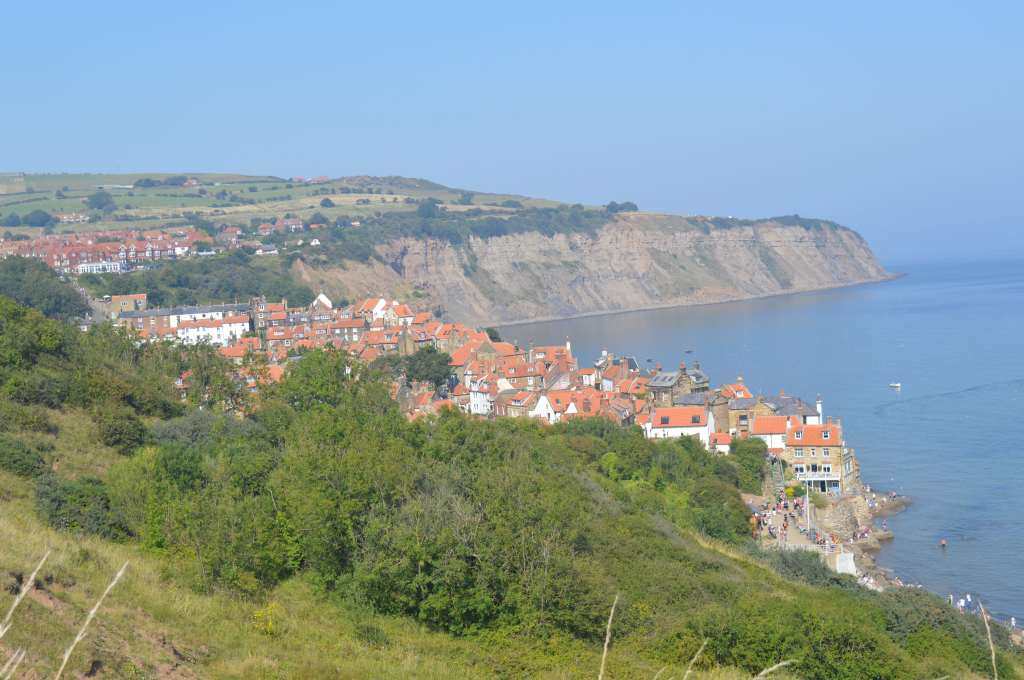
In June my walking buddy and I walked 80 miles of the Cleveland Way, from Helmsley to Whitby, the long way round! So far I’ve shared photos up as far as where the walk meets the sea at the top of the east coast of Yorkshire. Up to this point we had mainly been walking along escarpments on the North York Moors, now we were heading south along the coastal path, calling in at all the pretty little villages and towns along the way. The path reaches the coast at the busy village of Saltburn by the Sea.
It has an old pier as you can see, but the building at the head of the pier is the water powered cliff lift, one of the oldest funiculars in the world. I didn’t know either but a funicular uses cable traction for movement up a steep incline.
Erosion is a huge problem on this coast you can see old landslips on the photo above. The cliffs are mainly clay and unstable rocks, so the coastline is slowly retreating inwards, houses do occasionally go over the edge – in 1993 a hotel fell over the edge! The coastal path has a route change every so often, we certainly saw some pretty big cracks as we walked along.
We stayed the night in the village of Skinningrove which worked well with our distances, the next day we had a pleasant 8 mile walk to our next hotel.
The next village down was Staithes, a very pretty fishing village which has managed to reinvent itself as an arts and heritage centre. It’s built on a steep ravine and the cottages cling to the sides.
In between each village we had a climb back up to the cliff tops and several ravines to descend and ascend! We aim for about 10 to 12 miles a day, but with all the ups and downs we were glad of a couple of shorter days. We were pretty near the cliff edge in places which did cause me a few anxious moments!
Our next stop was at Runswick Bay, a lovely spot where our OH’s joined us for the night. It was lovely to see them again after a weeks walking, but we did have ulterior motives as well! The hotel was a bit more cost wise than we like to pay, so it made it a bit more special when they could come and join us, it also helped us with transport at the end and taking our luggage for us for the last days walking!!! We use a carry on service for our walks now, we book our hotels, give our itinerary to the company and they will pick up our suitcases each day and take them on to the next one, so we just have a day rucksack to carry. It’s not expensive and it makes a huge difference to the walk.
Runswick Bay
Every day of this walk seemed to start with a steep climb up, either onto the escarpment or up the cliff. The paths were well maintained with steps up and occasionally handrails, but our knees complained! We climbed lots of these…
…and lots of these too…
Sometimes the guide books told you how many steps, it doesn’t necessarily help to know there are 169 steps to go!
From Runswick Bay it was just over a five mile walk to Sandsend to meet our OH’s for lunch. We sat and ate a pizza overlooking these cottages on the other side of the inlet.
Sandsend
Sandsend to Whitby is only three miles, we had a choice of walking on the road or along the beach. Walking a distance on sand isn’t particularly easy, but it sure beats walking on tarmac! The tide was out so we headed along the beach to Whitby. This photo is looking back towards Sandsend.
Whitby is a lovely old fishing town, I have lots of happy memories of holidays up there with my children when they were little, it has great rockpools to explore, fossils to hunt for and a lovely historic town centre. We finished our walk down by the harbour, having glanced across towards the abbey to the 199 steps up to the church which would be our first challenge when we returned to finish the Cleveland Way.
Whitby
Having reached Whitby we had walked 80 miles of the Cleveland Way in 9 days, we just had 30 miles to go to Filey to finish the walk. We needed a bit of a rest first though!
I’ve been putting off writing this post as I knew it would take a while to write, my walking posts are usually about a one day walk, this time we walked for nine days so I’m going to split it into two posts! I have an evening free, so here we go!! Warning, it’s long and there’s lots of photos, so get a cup of tea, make yourself comfortable and lets get walking…
The Cleveland Way runs for 108 miles around the North York Moors National Park. It starts in the middle in the market town of Helmsley, goes round and up to the coast at Saltburn then all the way along the coast to Filey. I didn’t realise it’s one of the oldest long distance routes here in the UK, there were 50th anniversary walks a month before we did it.
My friend and I walk one of these long distance paths each year, 108 miles was a bit too far for us in one go (and in the annual leave available) so we decided to do the first 80 miles, Helmsley to Whitby, aiming to complete it before the end of the year.
Helmsley is a lovely town, a typical picturesque estate town, as Duncombe Park is next to it. Reasonably priced B&B for one night at the weekend is pretty near impossible to find, so we decided to stay for two nights at Kilburn instead, the end of the first stage and having got up there early, we decided to split the first stage over two days anyway, an easy start to the walk!
Helmsley
As we left Helmsley and gained a bit of height, there were good views over to the 11th century Helmsley Castle.
We detoured to Rievaulx (pronounced Reevow, rhyming with low!!) This is one of the Cistercian abbeys, founded in 1132, just the ruins remain since the dissolution of the monasteries by Henry VIII in 1538. It always amazes me when I see these old medieval buildings, beautifully built by hand and still standing!
Rievaulx Abbey
From Rievaulx the path gently rises through a couple of villages, woods and fields until it reaches the top of Sutton Bank, this is a well known view point as you can imagine. On a clear day you can see right across to the dales.
View from Sutton Bank
Our B&B was in Kilburn, just under the escarpment. The village is famous for the Mouseman of Kilburn, a master craftsman whose furniture can be found in many churches and big houses, recognisable by a little carved mouse he included on every piece. It’s also famous for it’s white horse, we can just see this (as a white splodge!) from Otley 40 miles away on a clear day. It’s not some ancient fertility symbol, it was actually created by the local schoolmaster in 1857!!
Kilburn White Horse
We got a taxi back up to the top of Sutton Bank the next morning as we had 11.5 miles to walk anyway. We followed the line of the escarpment with all the big views for quite a few miles until we descended through woods into the village of Osmotherley. The next morning we could look back and see the ridge we’d walked along.
Osmotherley.
The next day we were back up on the escarpment and we could just see Roseberry Topping in the distance, an iconic little hill a couple of days walking ahead, a little blip on the horizon!!
As you can see the paths were pretty good for most of the walk, a bit hard underfoot in places but well signposted and well maintained.
I like walks when you can look back and see how far you’ve walked, Osmotherley was down in the valley at the base of the far hill.
We spent the night in a farmhouse on the top of the moors, a great place to stay, comfortable and very friendly. There were a couple of young girls staying too and we were called down for dinner at 7pm to find a table groaning with a the trimmings of a full roast dinner. Then the farmers wife came in with the biggest roast chicken I’ve ever seen – I think it had aspirations to be a turkey!! After a homemade pudding and a bottle of wine, we were very well fed for £10!
We woke up the next morning to find the mist had come down. We could barely see 30′ in front of us at times, so we were very glad it was such a clear path.
After about an hour of walking through mist we had that magical experience when mist starts to lift, rolls around and then suddenly reveals the views around.
This was our longest days walk, we hoped it would be 15 miles, in turned out to be over 17 miles, a long way for us, so we were glad when the mist lifted and we could see more clearly.
Across the moors there’s quite a lot of these old boundary stones and standing stones, a reminder of the ancient routes across these moors.
As we descended from the escarpment, ready to climb up the next one we could see the ridge we’d spent the last couple of days walking along. The dip on the left is where our farmhouse B&B was the night before.
Our last ascent of the day was up to the Captain Cook memorial. There’s great views from here and we sat and watched hang-gliders setting off on the thermals. We could see Roseberry Topping quite clearly now but that would wait until the next morning. We were staying at the Royal Oak in Great Ayton, a lovely place, they even came and collected us from the end of the walk and took us back the next morning.
Roseberry Topping might only be little but it’s pretty steep, not easy to climb when you have no balance! So there’s no photos going up or down! You can see the path zig-zagging up.
The views from the top were worth the climb, again we could see the ridge we’d just spent a couple of days walking along…
…and the view forward…we can just see the sea!
Once we’d recovered from the detour up Roseberry Topping it was fairly easy walking along the moors and down towards the sea.
I think the coastal walk will have to wait until tomorrow. Hope you enjoyed it so far!
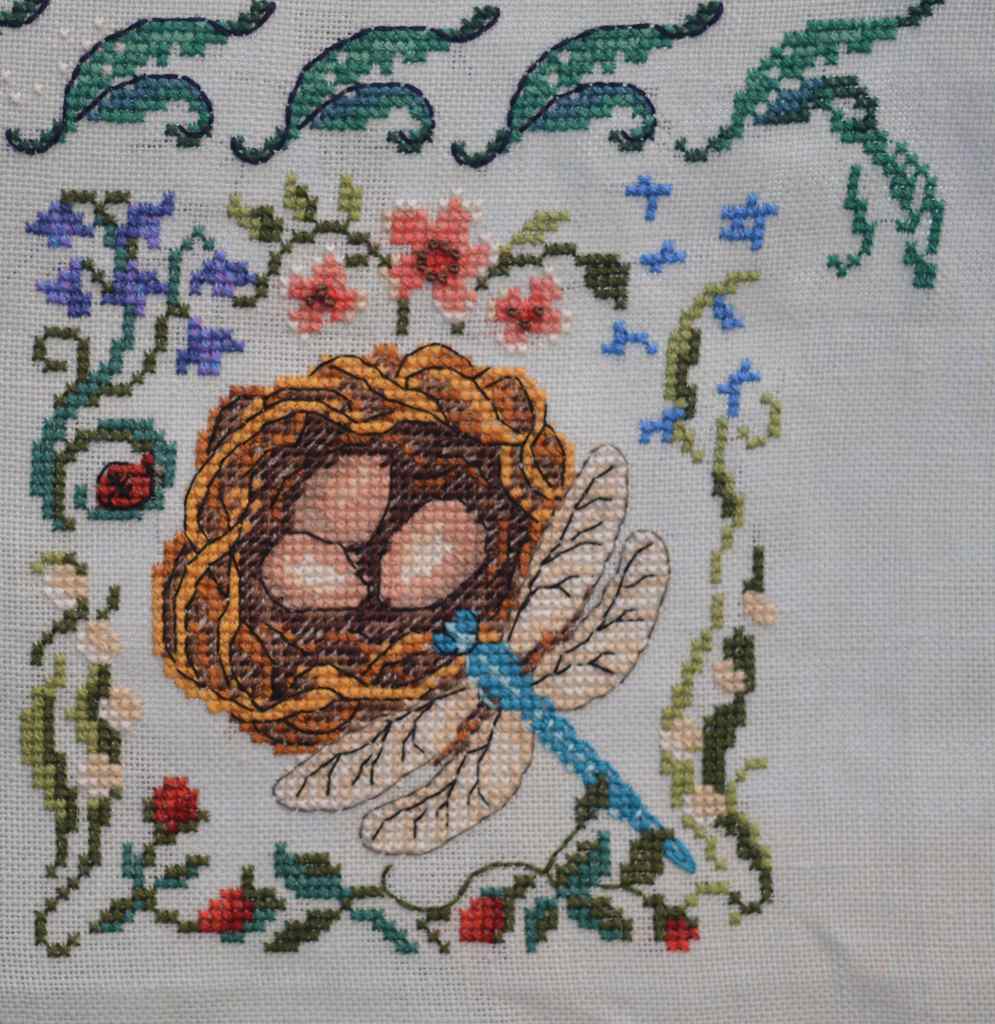
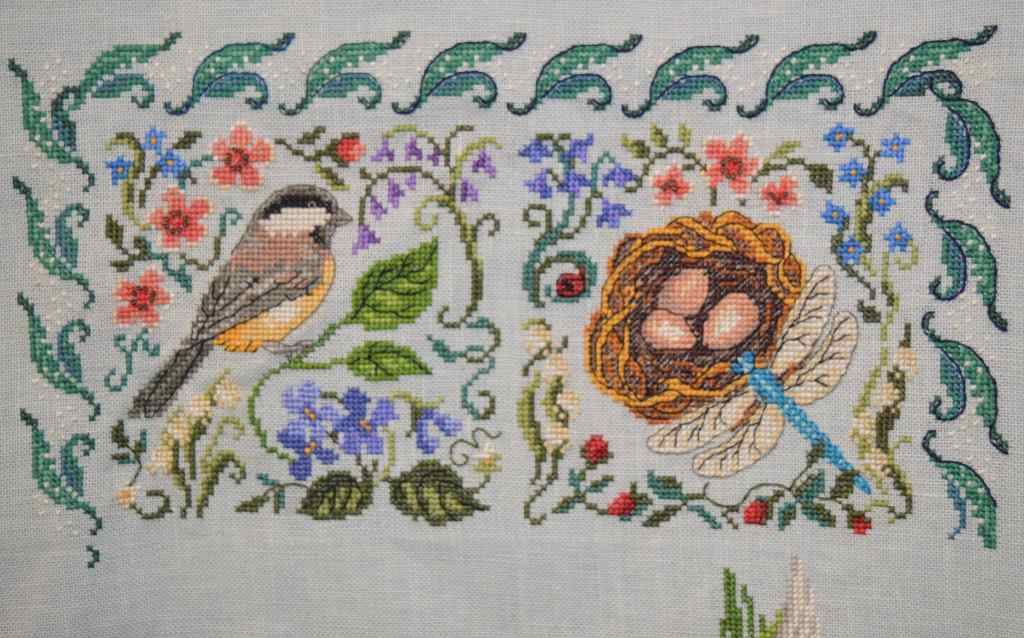
It’s three weeks since I last shared my Finery of Nature cross-stitch with you and if I say so myself, I’ve made pretty good progress!
Three weeks ago I was still deliberating over the colour of the back-stitching on the border. This is what happens when you change the colour of the background fabric from black to soft green, it’s easier on the eyes but harder on the decisions!! Having tried several different colours on the top row I still wasn’t sure…
I’ve now found a colour I’m happy with, in the end I took the whole thing down to Hobbycraft and played with their skeins. I bought four dark colours to try – I’ve found a big gap in the DMC colour range, there is no really dark grey, like a deep charcoal grey!The shade I found works is a really dark blue, a sort of midnight blue. It’s dark enough to feature whilst not being as hard as the black.
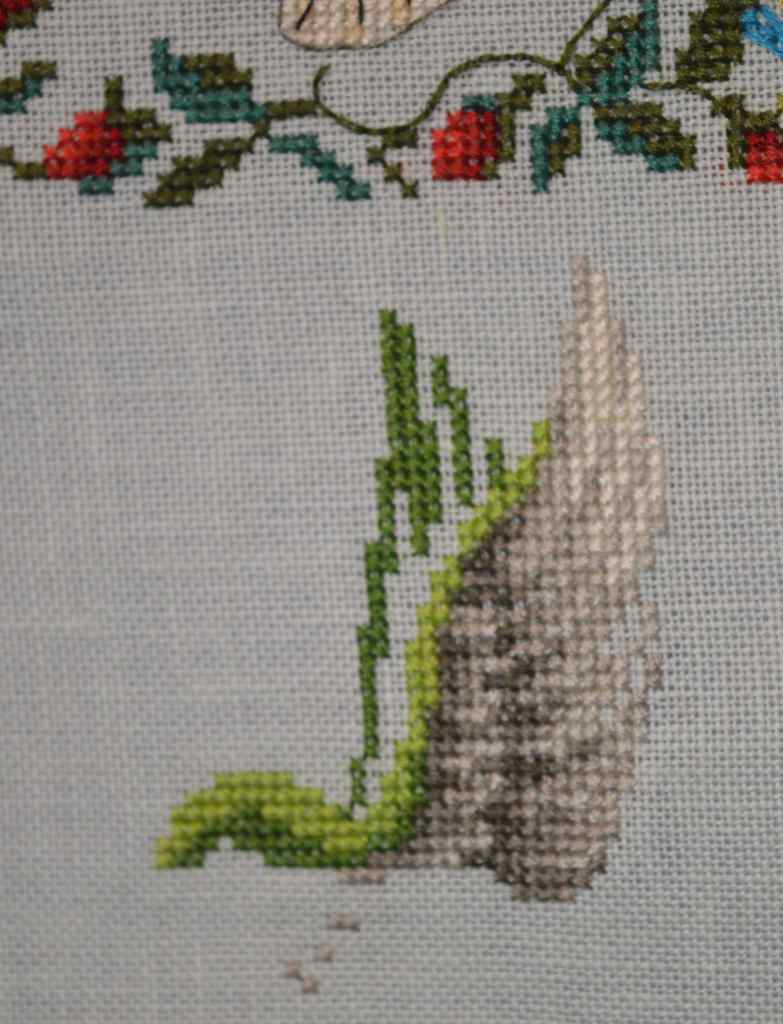
I finally finished all the back-stitching on the nest, I also added a soft taupe as a back-stitch round the wings. I’ve almost finished the flowers, though I mustn’t forget the french knots on the lily of the valley. Hopefully next time will be a mini happy dance as I finish this quarter and move onto the hummingbird.
This SAL is organised by Avis, we post our progress every three weeks, it’s a great motivator. If you would like to join us please send a message to Avis. For lots of hand-stitched inspiration, please follow the links;
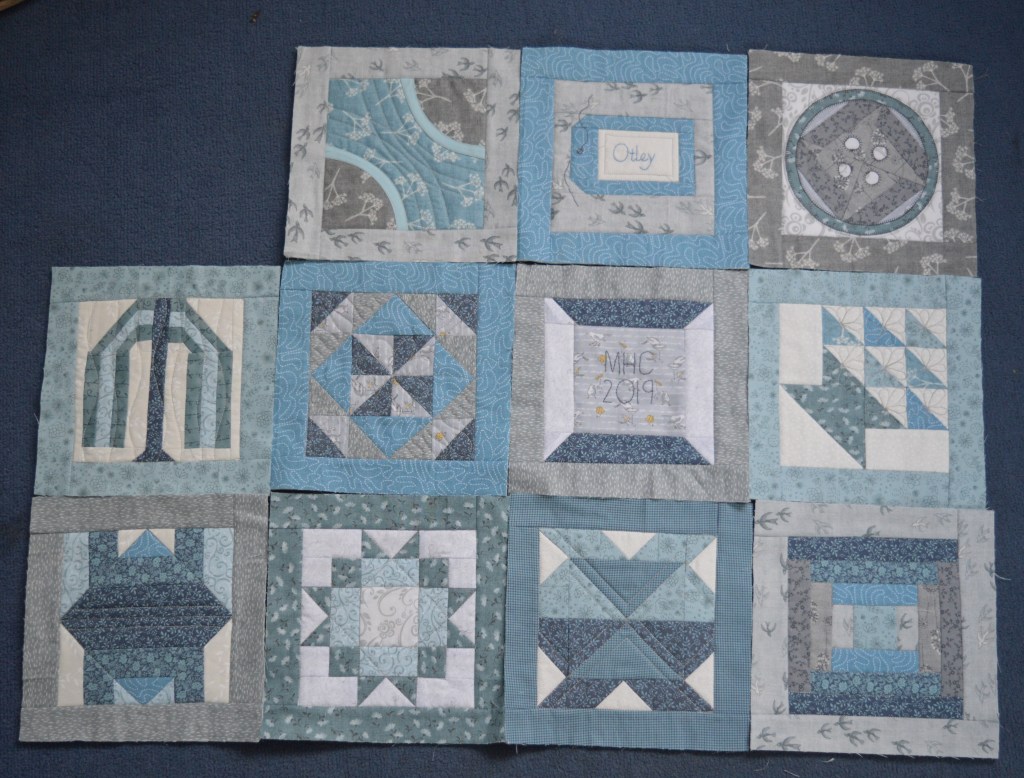
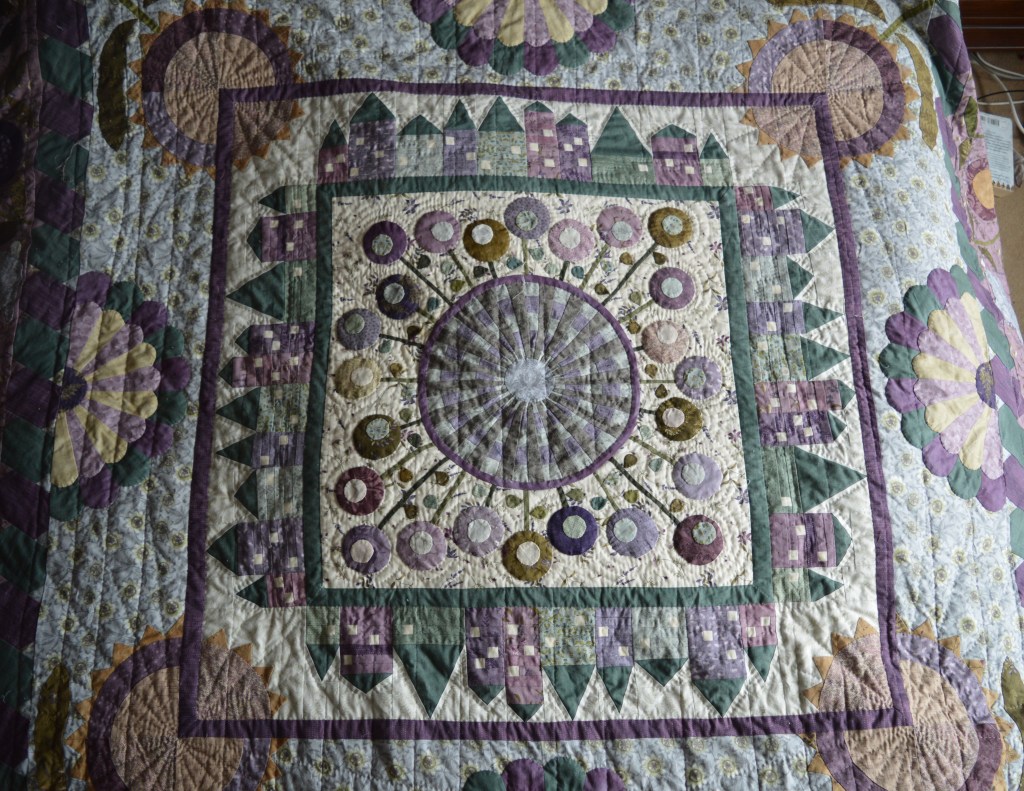
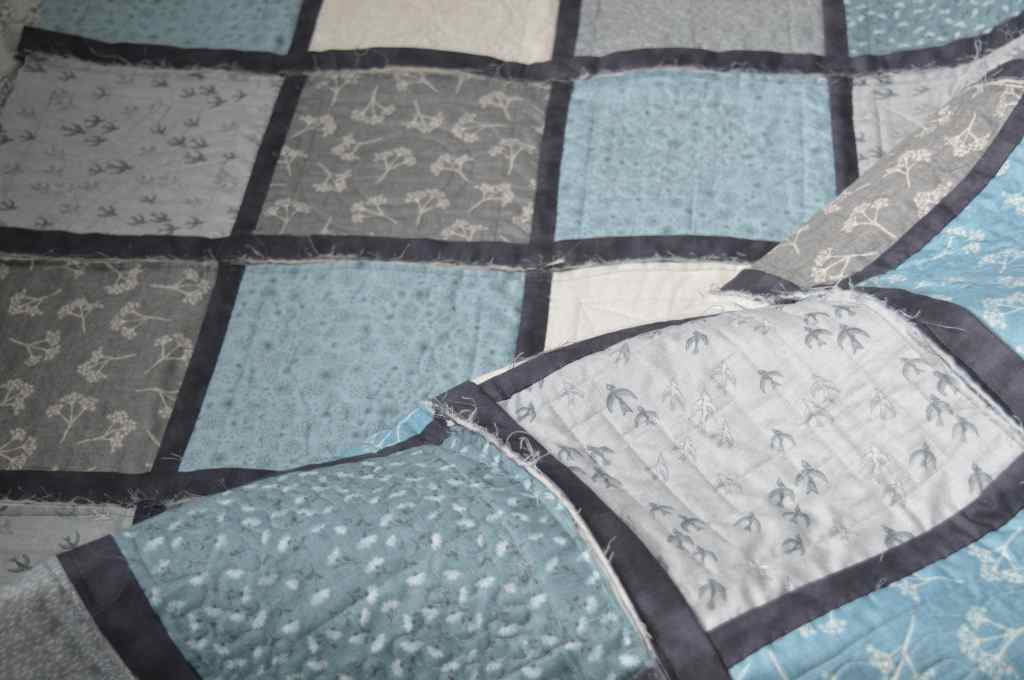
My sewing room has been looking a bit like a building site for the last couple of days. I’ve been working on my Coming Home quilt and I had fourteen houses to build!
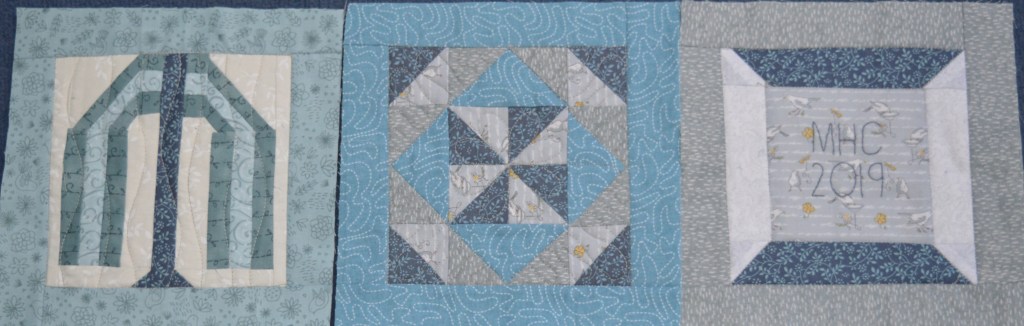
This border is being stitched over about four months, in July we made trees…
In August we had to make a selection of houses, they’re all either 4″ or 6″ wide. I’ve been putting it off all month as I was a bit over-faced trying to choose colours for all the houses. We were meant to work out the fabrics for all the houses last month, including the eight or so that we’re building in September. I just couldn’t picture it all at once. This is the centre square they are all going round…
In the end I chose fabrics I thought might work for the big ones, put those on one side and then chose fabrics for the little houses in pairs, hoping it will work when they all go together. I had a bit of an oops moment when I used a blob of fabric glue to hold the chimney’s in place…
There is one other oops where the background is upside down, luckily it’s not particularly noticeable. If anyone comments on it it’s a tree we used to see driving up to Wensleydale, we called it the upside down tree as there was a trunk and then lots of growth round the bottom!
The only house I’m not sure about is the rust coloured one, at the moment it stands out somewhat, but I’m going to reserve judgement until the bigger houses are made and I lay them all round the centre square.
From a distance they look OK, close up…well I wouldn’t get a job as a joiner, put it that way! Now I’ve got to start the bigger houses, they’re 8″, 10″ and 12″, so lots more windows! Hopefully this time I won’t prevaricate as much, seen as I’ve already chosen the main fabrics.
I’ll be linking up with Kathy’s Quilts tomorrow for Slow Stitching Sunday, why not follow the link to see lots more hand-stitching.
I’ve another six books to share with you which I’ve read over the summer. I now have a routine that I have two on the go, one for bedtime reading and one for reading on the go, such as on buses or trains, I try and make sure my on the go one is a paperback so it’s a bit lighter!
The Marches by Rory Stewart; I enjoyed this book though it did get a bit slow towards the end, Rory shared walks with his father along the border between England and Scotland, Rory on foot and his father ‘ambushing’ him by car. he looked into the turbulent history of the area as he went along, talking to people either side of the border about their feelings of identity. I found their observations of the political side interesting, he worked in the Foreign Office in Afganistan, his father was in the Malaysian Civil Service. An interesting person.
The Sheep Stell by Janet White; some people amaze me at their courage and drive to live the life they want. Janet was born into an academic family but having tasted country life when her family was evacuated during the war she decided she wanted to farm. Her work took her from shepherding in Scotland, to living alone on a remote island off New Zealand, to West Sussex and finally to Somerset. Great book and a fascinating life.
The Living Mountain by Nan Shepherd; I read this little book as it was mentioned by other authors I’ve read recently as inspirational. Nan was born near Aberdeen and loved the Cairgorms, she walked round them, over them and on them in all weathers and all seasons, getting to know the mountains intimately. Her book was first published in 1977 and was quite unusual in being written by a woman – her writing does have a different feel to it. I enjoyed this though I think if you knew the area you would love it more.
Wilding by Isabella Tree; Isabella and her husband inherited the family estate in West Sussex, they tried to keep it going as a farm but it was losing money fast. They decided to ‘rewild’ it, letting nature take over again. It was fascinating to read how the flora and fauna came back so quickly and also made them rethink what habitat is required by different animals or birds and how everything is interrelated. I read it with slightly mixed feelings though as I felt it was written as if this was the answer to failing farms, but this was only possible through grants and subsidies, this is a limited pot of money. There is also conflict over the countryside people want to see, this was scrubland, do we want our moors, mountains and valleys to be turned into scrubland? We do need to think about how we manage the countryside, looking at how farm practice and land management can help and improve natural diversity. Farmers also have their hands tied by government policies, subsidies and grants, so these need looking at. A few of these areas around the countryside would be wonderful. It’s one of those books that everyone who cares about the countryside should read.
The Brief Life of Flowers by Fiona Stafford. This is an interesting book, a chapter on each flower, from snowdrops and bluebells to elder-flowers, thistles and poppies. She looks at their history, their uses, the references to them in art and literature. It sounds a bit heavy but it’s easy to read, full of fascinating facts. I enjoyed it.
Between stone and Sky by Whitney Brown; This was my favourite from this pile of books, loved it. Whitney was living in North Carolina heading for a life in academia, she organised a folk festival with Wales as it’s theme, a dry stone waller came over and built a wall across the exhibition area. She was fascinated. She ended up going over to Wales to learn the art of building a dry stone wall. She fell in love with the work and the remote Welsh countryside (and the waller!) She split her time between Wales and America, gradually building up a business over there. It’s a very honest book of relationships, countryside, skills, difficult decisions.
So I’m still on the nature theme of writing – I’ve a lovely pile of books waiting to be read!
I’m having a pretty productive holiday at the moment, over the week-end I managed to catch up with both my cross-stitch stitch-a-longs, finished with a week to spare!
I’m now a quarter of the way through my Enlightenment SAL having completed the first row, I love the colours in this one and it will be interesting to see how the design develops on the next row. I changed the colour of two of the trees to a slightly lighter one and I’m pleased with how that’s worked out, they’re not quite so dark as the central one in the recommended DMC version…
The Zoe SAL by Faby Reilly is looking gorgeous! I’ve now finished the outside and the inside of the box. The latest section was the butterfly and the squirrel. Isn’t that squirrel just such a cutie!
I love the inside of the box as much as the outside! I do need to catch up with the outlining on this project as I haven’t finished the counted back-stitch round the next section yet!
I’ve just committed to another project too, though hopefully this one won’t take as long. It’s 200 years next year since Anne Bronte was born and in Scarborough there is going to be a textile exhibition which anyone can apply to take part in. Everyone is allocated a page from a vintage copy of Tenant of Wildfell Hall, mine is page 215 and you have to do a page size piece of embroidery inspired by the page or by Anne Bronte herself. If you fancy taking part please follow the link.
Having caught up on my cross-stitch, I’m now building houses for my Coming Home quilt – I think I’d better stick to the day job as I’m clearly not cut out to be a joiner!!
Well I did say I was on a bit of a roll! I’ve just finished another summer dress using McCall’s 6958. I cut this one out as soon as I finished the first one…
This time I used a length of Liberty tana lawn which I bought during my last trip to London – they had a big sale on, I seem to remember a 3m length cost about £30. This one is a wonderful mix of pinks, purples, blues, greens… it sort of reminds me of impressionist paintings, I love it!
I used french seams throughout again, I did add a quarter inch to the side seams as the first one was just a touch snug and as this fabric is a lot lighter I felt it needed a bit more ease. I also added quarter of an inch to the shoulder seams, as a way of lowering the bust / waist a little, on the first one I stitched a narrow seam instead. The only other change I made was to cut the skirt 6″ longer than the pattern which allowed me to stitch a more generous 2″ hem. The fabric was also 54″ wide which gave me the width for the extra length, allowing for the wider A-line skirt.
It’s been a bit of an interesting afternoon listening to the Ashes cricket match, it’s being held just up the road in Headingley. I’m not particularly into sport, but this one was pretty exciting! I’m Yorkshire through and through whereas my OH is Australian, I kept my cool sitting with some hand-sewing, stitching the facings down and then a bit of cross-stitch! As an aside, my aunt and uncle used to live on Kirkstall road and until the new stand was built they could watch the cricket from their attic window! I persuaded my OH to take some photos before he went for a walk to de-stress – he was well chuffed how many people liked his last arty-farty shot, so he did another one!
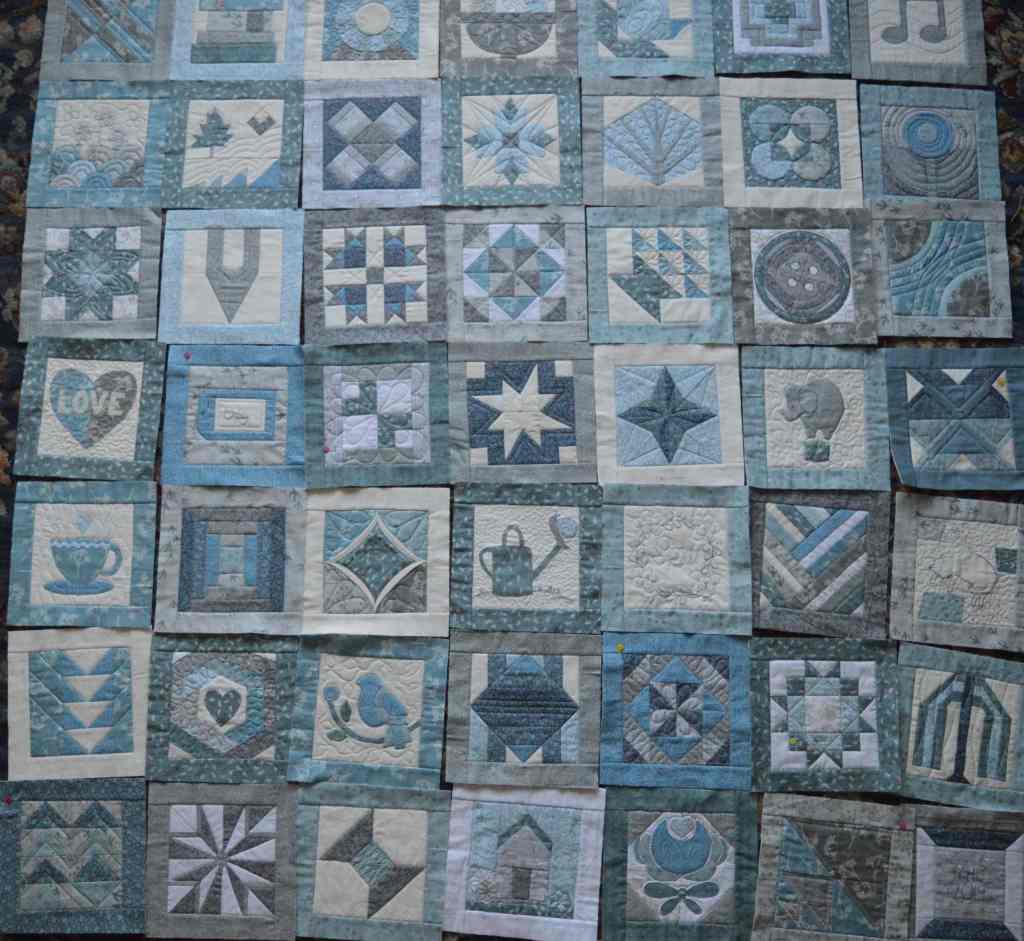
I really like this pattern, the dresses are comfortable and easy to wear, I think it’s also surprisingly flattering, all the pleats at the front could have made it bulky but it doesn’t. I think I’ll be using this pattern again, though maybe not this summer!
A few weeks back I went on a workshop at Fabbadashery by Deborah Mullins. We had a talk by her at my Embroiderers Guild and her work was beautiful. I’d already pencilled in her workshops at Fabbadashery so seeing her work just made me even more interested in attending.
Deborah spent three months in Palestine studying their embroidery whilst her husband was on sabbatical there. Originally each area had a distinct style and their own patterns but with all the troubles over the last few decades techniques and styles are being lost. The course I went on was on Tahriri embroidery. These are strips of embroidery that adorned their dresses, making panels for the bodice and also down the skirt.
The embroidery is predominantly couching with the pattern worked out so it’s one continuous thread. Having mastered basic couching with the outer straight lines and the central wiggle, we moved on to the more intricate flowers and hearts bit. We drew the pattern before hand on paper so our brains could get the design in our minds, a bit like we do with quilting patterns.
When I left the class, this is how far I’d got…
I popped it in my travelling sewing kit, so whenever I had a few minutes to spare I could do a bit more.Once I finished the couching I started filling in the flowers and hearts with satin stitch, with hindsight I’d probably have been better with a plain thread instead of a variegated, but I was away from home when I started that bit with limited choice of threads.
Today I went to Harrogate for a zip, arriving an hour before the shop opened, so I sat in the sunshine on a park bench and finished it.
I decided to make it into a bookmark, I usually have two books on the go and I only have one decent bookmark! I found some batik that matched the colours pretty well, so I stitched up the two sides and hand-stitched the top and bottom over.
I’m pretty pleased with my Tahriri embroidery, it’s not perfect by a long stretch, but it’s pretty and having seen how colours and threads work I’ll be much better placed to choose colour schemes when I do the next workshop on Bethlehem embroidery in September.
I’ll be linking up with Kathy’s Quilts for Slow Stitching Sunday, why not follow the link to find lots of hand-sewn inspiartion.